Largemouth vs Smallmouth Bass in New Hampshire: Key Differences

Catch Both Bass Species
Fish New Hampshire lakes with Daniel Murphy and take on largemouth and smallmouth.

Published:
Updated:
Ask a few New Hampshire anglers which bass they like best and you will start an argument. Largemouth and smallmouth both live in the state's lakes, and both put up a good fight. They are not the same fish, though, and treating them as one species is a quick way to have a slow day. Daniel Murphy of Lake 'N Land Guide Services, LLC runs trips out of Epping, NH where anglers can chase both, so telling them apart is a skill that pays off right away.
How to Identify Largemouth and Smallmouth Bass
The easiest check is the mouth. On a largemouth, the jaw line runs back past the eye. On a smallmouth, the jaw stops about even with the eye. Once you have seen the difference a few times, you will spot it without thinking.
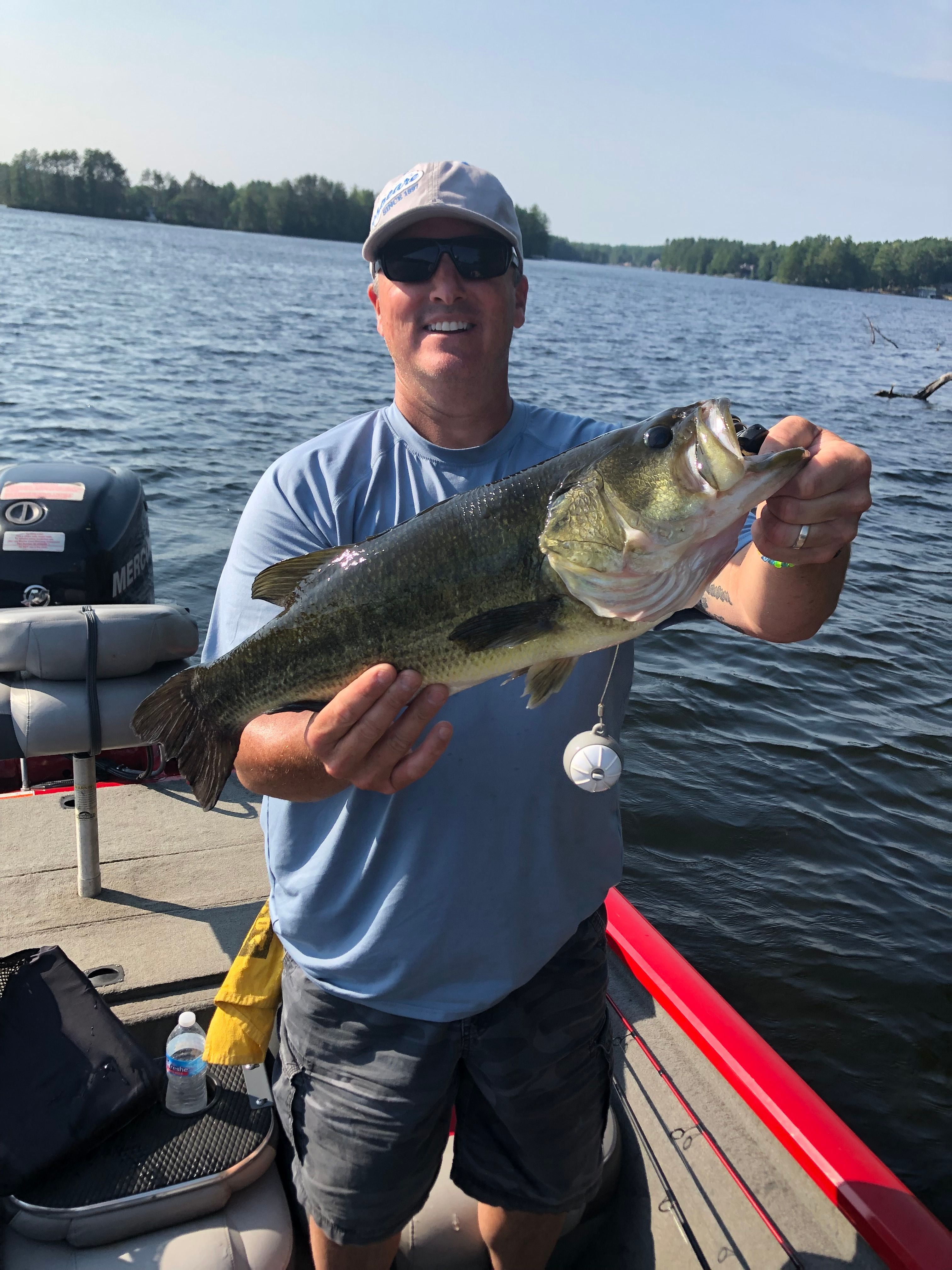
Color and body shape help too. Largemouth are usually green, with a dark horizontal stripe along the side and a deeper, heavier-bodied look. Smallmouth lean toward bronze or brown, often with faint vertical bars, and their bodies look leaner and more streamlined. Smallmouth also have a reddish eye, which is easy to see when you hold one up for a photo.
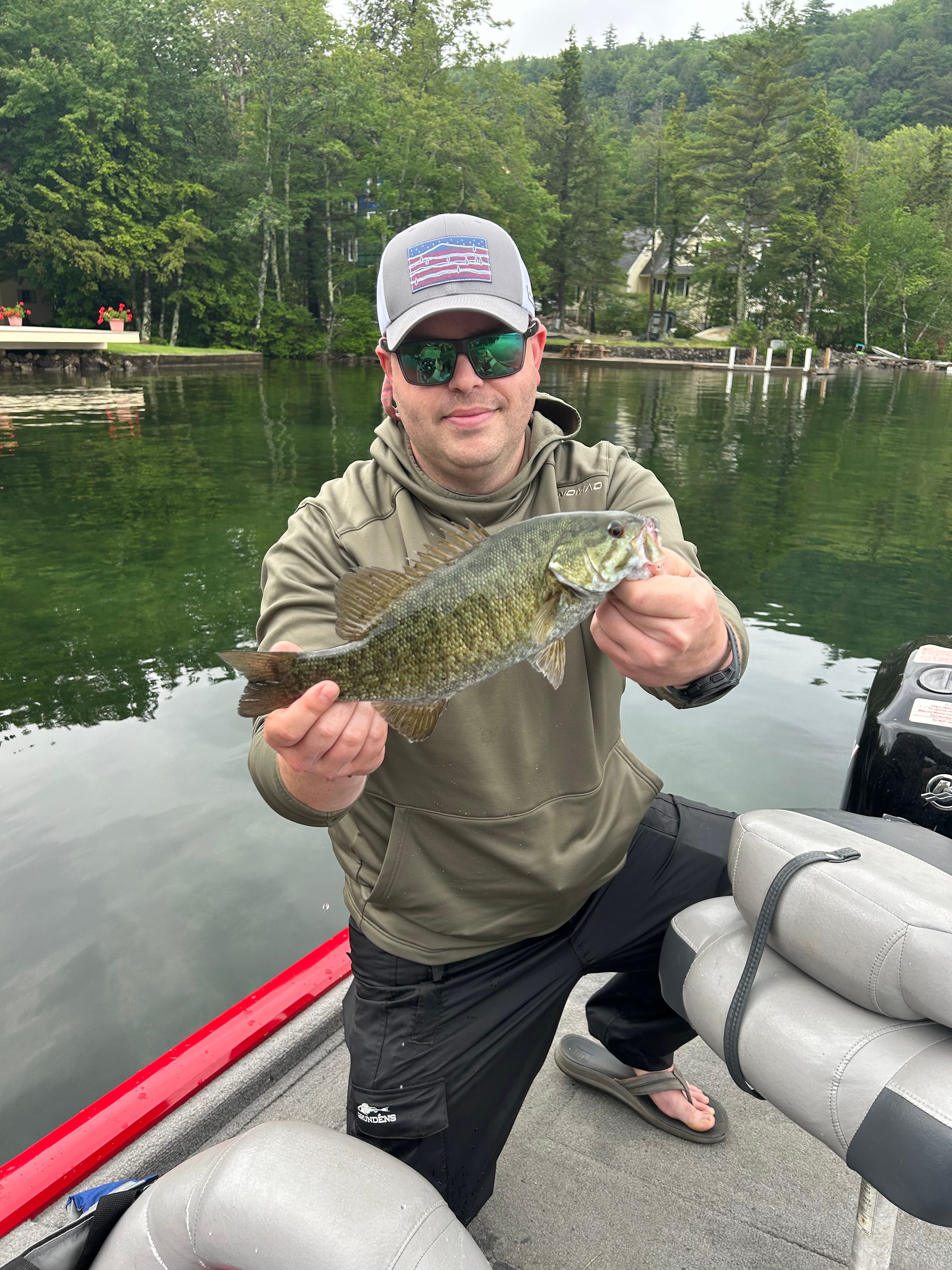
One more tip is the dorsal fin. A largemouth's fin is almost split in two, with a deep notch between the spiny front section and the soft back section. A smallmouth's fin looks more connected. If you are ever unsure, look at the jaw first and the fin second.
How the Two Species Tend to Behave
Largemouth generally like cover. Think weed edges, docks, fallen trees, and other places where a fish can tuck in and wait. They tend to ambush what swims by instead of chasing it down.
Smallmouth generally prefer harder bottom and cleaner, firmer structure, such as rocky points and gravel. They are known for roaming more and hitting with real energy. Many anglers say a smallmouth feels like it fights harder for its size, and that reputation is a big part of why people love them.
These are general patterns, not rules. Water conditions, weather and the particular lake all shift where fish sit on a given day. That is where a guide with local knowledge earns his keep. Daniel has fished New Hampshire's lakes and rivers for over 25 years, including 15 years of competitive bass fishing, and he has spent that time learning how the fish use each body of water.
What Changes in Your Approach
The biggest shift is where you put the bait. For largemouth, you are usually working close to cover, so you need to be accurate and patient. A cast that lands a few feet off the edge of a dock or weed line can be the difference between a bite and nothing. You also need gear that can pull a fish out of heavy cover once it hits.
For smallmouth, you are often covering more ground. You look for rock, drop-offs and firm bottom, and you keep moving until you find fish. Presentation matters here. A smallmouth that follows a bait and turns away is telling you something, and a small change in speed or style can turn that follow into a strike.
- Largemouth: target cover, make precise casts, and be ready to muscle fish out of thick spots.
- Smallmouth: target rocky structure, cover water, and adjust your retrieve when fish follow without biting.
- Both: pay attention to what the water and weather are doing, and change your plan when the fish tell you to.
Handling matters too. Whichever species you catch, wet your hands before you grab the fish, support its body, and keep it out of the water only as long as you need for a quick photo. A healthy release means that fish is there for the next angler.
Why Fish Both in One Day
Learning two species back to back is one of the best ways to become a better bass angler. Each one forces you to read the water differently. You start noticing the small things, like the way a shoreline drops off or how a patch of weeds sits, and those details carry over to every lake you fish afterward.
Daniel's trips are built around that kind of learning. His goal is a fun, educational and action-packed day, whether you are brand new to bass fishing or already know your way around a tackle box. His waters include Lake Winnipesaukee, Squam, Newfound, Bow, Pawtuckaway and Ossipee Lake, so there is plenty of variety to work with. If you want to see the differences between these two fish for yourself instead of just reading about them, a guided day on the water is a good way to do it.
Next time you land a bass, check the jaw, look at the color, and think about where it was holding. That one habit will teach you more about the two species than any chart. And if you want someone beside you who has spent decades doing exactly that on New Hampshire water, Lake 'N Land Guide Services is ready to get you out there.